Why a Name on a Banner Moves Bureaucracies That Years of Statistics Never Could
Photo: HistoricPakistan, CC BY-SA 4.0, via Wikimedia Commons
For years, criminal justice reformers have marshaled staggering data to press police departments into revisiting neglected cases. They have cited clearance rate failures, published reports on racial disparities in investigative resources, and delivered testimony at city council hearings armed with spreadsheets. The response, more often than not, has been polite acknowledgment followed by institutional inertia.
Then someone puts a name on the door.
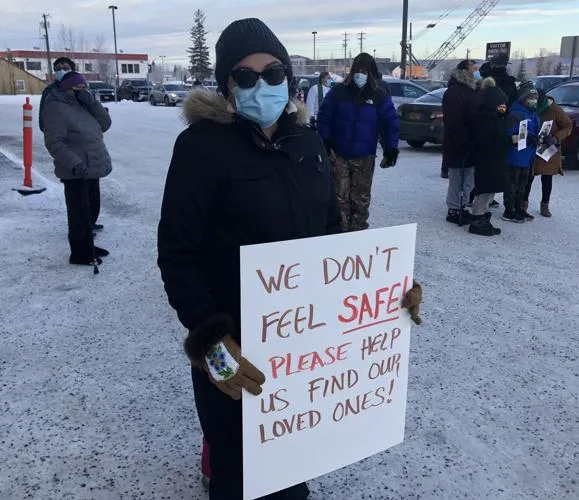
The phenomenon is difficult to quantify but impossible to ignore. When a movement organizes specifically around a single individual — when protest signs read "Justice for Jean" rather than "Reform the Cold Case Unit" — police departments that had resisted systemic pressure for years suddenly find themselves reopening files, reassigning detectives, and issuing public statements. The question that investigators, psychologists, and veteran advocates are now asking in earnest is: why does a name succeed where numbers so consistently fail?
The Psychology of the Particular
Dr. Renata Okafor, a social psychologist at the University of Michigan who studies moral decision-making in institutional settings, has spent the better part of a decade researching what she calls "the identifiable victim effect" in bureaucratic contexts. Her findings are striking.
"When people — including police officers and their commanders — are presented with aggregate data about injustice, the emotional centers of the brain that motivate action remain largely dormant," she explains. "But when they are confronted with a specific person, a face, a name, a family waiting for answers, the calculus changes entirely. Suddenly, inaction has a human cost they can picture."
This is not a new psychological principle. Decades of research on charitable giving have demonstrated that donors respond far more generously to the story of one named child than to reports describing thousands in need. What is newer — and what the Justice for Jean movement has helped illuminate — is the degree to which the same dynamic operates inside law enforcement agencies, institutions that pride themselves on data-driven objectivity.
Detective Sergeant Marcus Tillman of the Allegheny County cold case unit in Pennsylvania, who agreed to speak on the record, put it plainly: "I've sat through a hundred advocacy presentations with charts and graphs. They didn't change my caseload priorities. But when a community rallies around one person by name, and that name is in the newspaper every week, and that family is at every public meeting — that changes the internal conversation. Leadership starts asking questions. Resources start moving."
Institutional Pressure and the Accountability Gap
Beyond individual psychology, there is a structural explanation for why named movements generate institutional responses that generic campaigns cannot. Police departments, like all public agencies, are acutely sensitive to concentrated, sustained, and visible public pressure on specific matters. Diffuse criticism of systemic failures allows administrators to deflect responsibility. A movement demanding answers for one named victim does not permit that deflection.
"When you say 'fix cold cases,' a police chief can point to budget constraints, staffing shortages, jurisdictional complexity — any number of systemic factors that make the problem feel intractable," says Dominique Hargrove, a community organizing director with fifteen years of experience in criminal justice advocacy across the South and Midwest. "When you say 'reopen Jean's case,' you've eliminated the abstraction. Now there's a specific file, a specific detective, a specific set of decisions that can be examined and questioned. The accountability is suddenly concrete."
Hargrove has observed this pattern play out in multiple cities. In each instance, the shift from broad advocacy to named-victim organizing produced measurable changes in law enforcement responsiveness — not because the underlying facts of the cases changed, but because the political and social cost of continued inaction became impossible to distribute across a vague systemic narrative.
Police chiefs, who are often appointed officials answerable to mayors and city councils, are particularly sensitive to this dynamic. Former police superintendent Carla Whitfield, who oversaw a major Midwestern department for eight years before retiring, acknowledges that named campaigns altered her department's internal priorities on more than one occasion.
"I'd be less than honest if I said public pressure played no role in resource allocation," she told this publication. "When a community is organized, vocal, and focused on a specific case, it becomes part of the operational environment. Commanders respond to that environment. That's not corruption — it's accountability working as it should."
The Organizer's Calculus
Movement organizers who have deliberately built campaigns around individual names describe a strategic intentionality behind what might appear to be a natural emotional response to loss.
"Choosing to center a movement on a person rather than a policy is a decision," says Hargrove. "It means committing to telling that person's story repeatedly, keeping their humanity in front of the public, and making sure that every institutional actor knows their name. It's labor-intensive work. But it builds a kind of moral urgency that no policy paper ever has."
This approach carries ethical responsibilities that experienced organizers take seriously. The dignity of the individual at the center of the cause must be protected, families must be genuine partners in any advocacy effort, and the movement must resist the temptation to reduce a complex human life to a symbol of institutional failure. When those responsibilities are honored, organizers report, the moral authority of the campaign becomes its most powerful asset.
"People can sense when advocacy is genuine and when it's performative," says community advocate Tasha Brennan, who has helped families navigate cold case advocacy in the Gulf Coast region. "When the love for the person at the center is real, it communicates itself. And that authenticity is what ultimately moves people — including people inside police departments who have become accustomed to tuning out political noise."
What This Means for Jean — and for Every Jean
The Justice for Jean movement was founded on a conviction that has now been borne out by evidence from communities across the country: that one name, spoken persistently and with moral clarity, possesses a power that no statistical argument can replicate. Police departments that had allowed cases to grow cold for years have reopened them. Detectives who had moved on have returned to files. Administrators who had deflected accountability have been compelled to answer specific questions about specific decisions.
None of this renders systemic reform less necessary. The structural failures that allow cases to be abandoned — inadequate funding, insufficient staffing, racial and socioeconomic disparities in investigative prioritization — demand comprehensive policy responses. But the path to those systemic reforms often runs directly through the named and particular. It runs through Jean.
For every family currently living in the silence of an unresolved case, the lesson from this research and from the testimony of those who have fought these battles is both sobering and clarifying. The system responds to pressure. Pressure is most effective when it is concentrated, sustained, and human. And nothing is more human than a name.
Speak it. Repeat it. Put it on the banner and carry it to every public meeting, every press conference, every legislative hearing until the file is reopened and the work of justice can finally begin.
Justice for Jean is committed to amplifying the voices of families and communities demanding accountability for unresolved cases. To learn how to organize a named advocacy campaign in your community, visit our Community Action resources.