A Name Changes Everything: The Transformative Power of Identity in America's Most Overlooked Cases
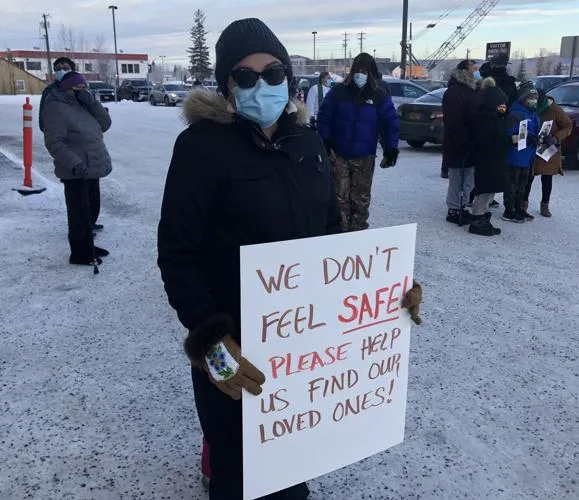
Photo: justice advocate holding photograph of missing person at community vigil, via bloximages.newyork1.vip.townnews.com
In the vast machinery of the American justice system, cases are assigned numbers before they are assigned meaning. A file is opened. Evidence is catalogued. And then, far too often, a folder is closed and shelved — the person at the center of it reduced to an alphanumeric code in a database that no one is searching.
But something shifts when advocates refuse to let that reduction stand. Something measurable, documented, and profound occurs when a community insists on speaking a name aloud — when "Case #2847" becomes Jean.
This is not sentiment. This is strategy. And the evidence supporting it is both compelling and damning of the systems that require it in the first place.
The Psychology of the Named Victim
Researchers studying charitable giving and public empathy have long observed what psychologist Paul Slovic termed the "identified victim effect" — the demonstrable phenomenon in which people respond with significantly greater urgency and emotional investment to a single, named individual than to abstract statistics representing thousands. In one landmark study, donations to famine relief nearly doubled when a single child's name and photograph accompanied the appeal, compared to appeals citing millions of people in crisis.
The justice system is not immune to these same human dynamics. Prosecutors, judges, journalists, and legislators are people first — and people, neurologically and culturally, are wired to respond to stories, not spreadsheets.
When a victim has a name, a photograph, a birthday, a favorite song, a family that shows up every week to demand answers, the case transforms from an administrative burden into a moral obligation. The community begins to see itself in that person. The abstract becomes intimate. The forgettable becomes unforgettable.
Case Studies in the Power of Identity
The history of American advocacy is populated with cases that illustrate this principle with painful clarity.
Consider the cases that languished for years in jurisdictions across the country — cases involving victims who were homeless, undocumented, or estranged from family networks capable of sustaining public pressure. These cases frequently share a common trajectory: initial coverage, rapid drop-off, investigative stagnation. The victims, often described only by physical characteristics or case designations, remained strangers to the public. Without a name to rally around, there was no movement to build.
Contrast those trajectories with cases in which advocates — sometimes a single determined individual — undertook the work of humanization. They gathered photographs. They interviewed neighbors and former colleagues. They told stories of ordinary lives interrupted by extraordinary violence or neglect. They gave the public something to hold onto.
In several documented instances across states including California, Georgia, and Illinois, cases that had gone cold for years were reopened within months of sustained, identity-centered advocacy campaigns. Prosecutors who had previously cited lack of evidence or resources suddenly found both. Tips began flowing in. Witnesses who had stayed silent came forward. The machinery that had stalled began, however reluctantly, to move.
What Naming Does to Media Coverage
Journalism operates on narrative logic. An editor assigning coverage must answer a fundamental question: why should our readers care about this story today? Without a name, without a face, without a story that readers can emotionally enter, that question is difficult to answer in a way that survives a budget meeting.
Media analysts who study coverage disparities in missing persons and homicide cases have found consistent patterns: named victims with identifiable personal histories receive significantly more column inches, more broadcast minutes, and more sustained follow-up coverage than those whose identities remain vague or contested. This disparity compounds over time. More coverage generates more public pressure. More public pressure generates more investigative resources. More investigative resources generate more leads.
The named victim, in other words, does not simply receive justice more readily because people feel more sympathy. They receive justice more readily because identity activates the entire ecosystem of accountability — press, public, and prosecutor — in ways that anonymity cannot.
Advocacy organizations have recognized this dynamic and built communications strategies around it. They invest in storytelling infrastructure: professionally produced documentaries, social media profiles maintained in the victim's voice or memory, community vigils designed to generate photogenic moments of collective grief that news cameras are inclined to capture. These are not manipulative tactics. They are necessary corrections to a system that has structurally disadvantaged the voiceless.
The Prosecutorial Dimension
District attorneys and state prosecutors operate under political pressures that, while rarely acknowledged in formal settings, profoundly shape case prioritization. Elected prosecutors are responsive to constituents. Constituents are responsive to names.
Legal scholars studying prosecutorial discretion have noted that cases with active, organized advocacy communities — cases where a specific name is being spoken at city council meetings, amplified across social media platforms, and referenced in letters to the state attorney general's office — are measurably more likely to receive renewed investigative attention than equivalent cases without such organized pressure.
This is not an endorsement of the status quo. It is an indictment of it. Justice should not be allocated according to a victim's ability to inspire a social media campaign. Every case file in every jurisdiction in this country contains a human being who deserved better than the system delivered. But until structural reform catches up with structural failure, naming is one of the most powerful tools available to those who refuse to accept that a number is sufficient.
Why Jean Matters — As a Name and as a Principle
The work of this platform has always been rooted in a specific understanding: that the fight for Jean is simultaneously a fight for the principle Jean represents. Every time we speak her name — every time we refuse to let her story dissolve into bureaucratic abstraction — we are demonstrating, in real time, the mechanics of what identity-centered advocacy can accomplish.
We are also building a record. The sustained public attention generated by naming and humanizing a case creates documentation that outlasts news cycles. It creates accountability trails. It signals to prosecutors, legislators, and journalists that this community will not accept silence as an answer.
Advocates who have studied the long arc of justice movements in this country will recognize that the cases most likely to produce not only individual accountability but systemic reform are precisely those in which a name became a rallying point. From Emmett Till to Matthew Shepard to Breonna Taylor, American history demonstrates repeatedly that identity is not incidental to justice — it is foundational to it.
The Obligation to Name
For advocates, journalists, and community members engaged in this work, the lesson is both clear and demanding. Naming a victim is not a passive act of commemoration. It is an active, strategic intervention in systems designed — whether by intent or indifference — to process human beings as administrative units.
To name is to insist on personhood. To insist on personhood is to demand that the system respond accordingly. And to demand that the system respond is to begin, however incrementally, to change it.
Jean's name is not merely a label. It is a claim. A claim on the attention of the powerful, on the conscience of the public, and on the obligation of every institution that failed her to account for that failure in full.
One voice. One fight. One name that refuses to become a number again.