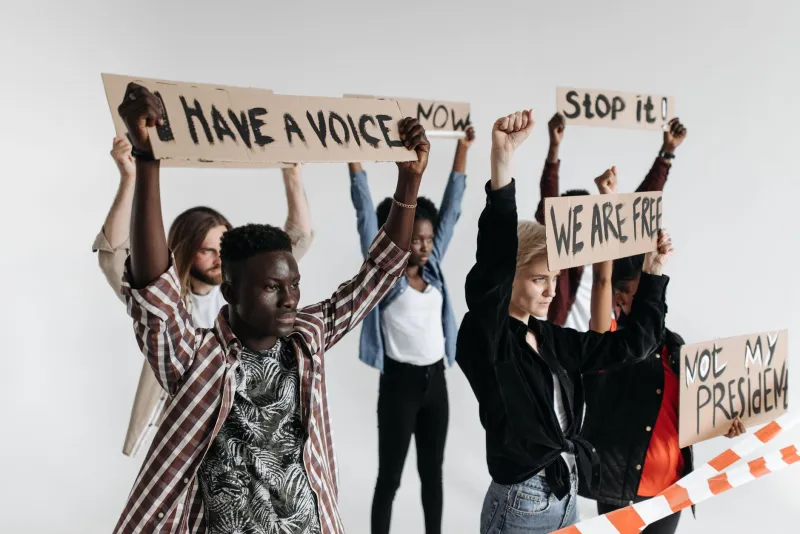
When One Voice Becomes Many: The Anatomy of a Justice Movement
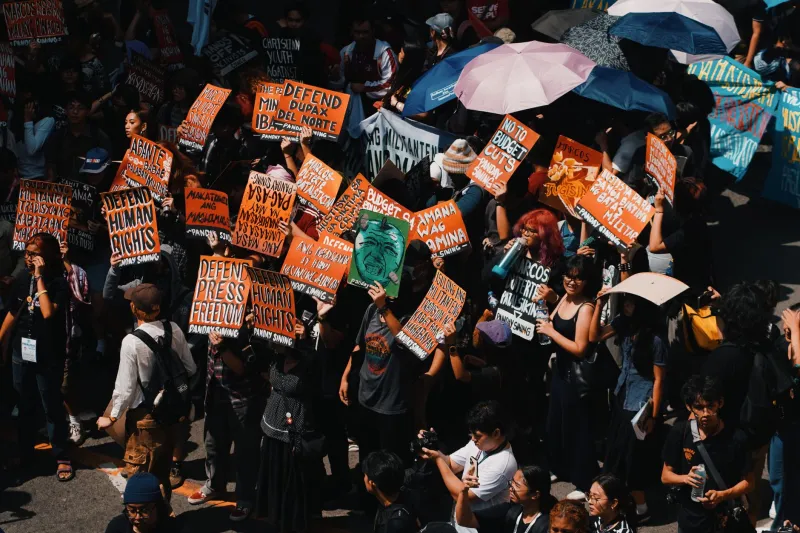
There is a moment, often quiet and unannounced, when a single person's fight for justice stops being a private ordeal and becomes something larger than themselves. It rarely happens overnight. It does not arrive with press conferences or political endorsements. It begins, instead, with a name — spoken aloud by someone who refuses to let it be buried.
At Justice for Jean, that name is our foundation. But Jean's story is not unique in its origins. Across the United States, a pattern has emerged with striking consistency: individual cases of systemic failure, when met with persistent advocacy and community solidarity, have the capacity to reshape laws, redirect institutional resources, and fundamentally alter how Americans understand justice. This investigation examines precisely how that transformation occurs — and what it demands of those who carry it forward.
The Spark: Why Certain Stories Cross the Threshold
Not every injustice becomes a movement. That is an uncomfortable truth that advocates must reckon with honestly. Researchers who study social mobilization have long observed that cases which achieve national resonance tend to share several characteristics: a clear victim, an identifiable failure of institutional responsibility, and a narrative accessible enough to be understood without legal expertise.
Dr. Angela Watkins, a sociologist at the University of Michigan who has studied civil rights mobilization for over two decades, describes this as the "narrative threshold." "People respond to stories," she has noted in her published research. "Abstract systemic failures are difficult to act upon. A specific person, a specific harm, a specific moment of institutional neglect — that is where empathy becomes energy."
Jean's case embodies this threshold. The details are specific. The institutional failures are documented. And critically, the humanity at the center of this fight is undeniable. These are not accidents of circumstance. They are the conditions under which movements are born.
From Grief to Organizing: The Psychological Architecture of Advocacy
For those closest to a case — family members, friends, neighbors — the early stages of advocacy are inseparable from grief. The decision to channel personal devastation into public action is neither simple nor linear. Psychologists who work with survivor advocates frequently describe a process of what they call "purposive mourning" — the transformation of loss into directed, goal-oriented effort as a means of sustaining psychological endurance.
This is not a clinical detachment from pain. Quite the opposite. The most effective advocates are those who have learned to carry their grief alongside their strategy, allowing the emotional truth of a case to inform their public voice without overwhelming their capacity to organize. It is a delicate and demanding balance.
Marcelline Torres, a veteran community organizer based in Chicago who has helped families navigate the transition from personal tragedy to sustained advocacy, described the process during a recent interview. "The families who build lasting movements are the ones who find community early," she said. "Isolation is the enemy of endurance. When you connect with others who understand your pain — and who are willing to stand beside you in a sustained way — something shifts. The fight becomes collective, and collective fights are much harder to silence."
This observation is borne out by the historical record. The movements that have produced the most durable legislative change in the United States — from Mothers Against Drunk Driving to the Adam Walsh Act — were not the products of solitary crusades. They were networks, built methodically over years, that expanded far beyond their founding families.
The Media Cycle Problem — and How Movements Survive It
One of the most significant structural challenges facing any individual justice cause is the indifference of the national media cycle. Initial coverage, when it comes, is frequently intense but brief. The news moves on. Editors chase new stories. And the families left behind must contend with a paradox: the public attention that once amplified their cause has evaporated precisely when the legal and legislative work is most critical.
Advocates who have successfully navigated this challenge consistently point to the same strategy: building independent infrastructure that does not depend on media validation. This means cultivating relationships with state legislators directly, establishing community coalitions that generate their own visibility, and maintaining a consistent digital presence that keeps a case alive in public consciousness between news cycles.
"You cannot wait for the media to care," Torres noted. "You have to build the table yourself and invite people to sit at it."
Justice for Jean operates on precisely this principle. Our platform exists because the mainstream media's attention is finite, but justice is not. The ongoing documentation of Jean's case, the community forums, the calls to action — these are not supplementary to the fight. They are the fight, sustained and made durable through collective commitment.
Legislative Impact: When Personal Stories Rewrite the Law
The ultimate measure of a justice movement's reach is often found in legislative chambers. Across the country, laws bearing the names of individuals — Megan's Law, Marsy's Law, the Matthew Shepard Act — stand as testimony to the capacity of personal stories to alter legal frameworks at the state and federal level.
This legislative pathway is neither simple nor guaranteed. It requires sustained pressure, strategic coalition-building, and the ability to translate emotional advocacy into the technical language of policy reform. Advocates who have successfully moved legislation describe a process that demands patience measured not in months but in years.
What distinguishes successful legislative campaigns from those that stall is frequently the breadth of the coalition assembled. Single-issue advocates, however passionate, face significant structural limitations in legislative environments. Movements that expand their coalition to include civil rights organizations, legal reform advocates, faith communities, and bipartisan legislative allies have consistently demonstrated greater capacity to move legislation across the finish line.
The progressive case for these reforms is not merely sentimental. Systemic failures that harm individuals like Jean are, by definition, systemic — meaning they affect communities broadly, often along lines of race, class, and geography. Movements that articulate this broader dimension of injustice, while maintaining the specific humanity of their founding case, are the ones that build the widest coalitions and achieve the most durable change.
The Responsibility of Witness
There is something this investigation must state plainly: movements do not sustain themselves. They are sustained by people — by readers who share articles, by community members who attend meetings, by citizens who contact their state representatives, and by advocates who refuse to allow a name to be forgotten.
The sociological and psychological factors that make certain cases resonate nationally are, in the end, activated by human decision. The decision to pay attention. The decision to act. The decision to remain engaged when the news cycle has moved on and the political moment has grown inconvenient.
Justice for Jean is built on the conviction that Jean's story deserves that sustained attention — and that the systems which failed Jean will continue to fail others until they are held accountable and fundamentally reformed.
One voice began this fight. The question now is how many voices will join it.
If you are ready to take action, visit our Community Action resources to find out how you can contribute to this ongoing effort. Justice is not a spectator endeavor. It requires all of us.