Unnamed and Unheard: The Growing Movement to Give Anonymous Victims a Voice in American Courtrooms

Every year, courtrooms across the United States process cases in which the victim is identified by nothing more than a placeholder — Jane Doe, John Doe, Jean Doe. These designations, originally designed to protect the vulnerable, have increasingly become a mechanism through which survivors are rendered invisible, their suffering catalogued in legal filings that the public rarely scrutinizes and that institutions rarely revisit. For many of these individuals, the anonymity that was supposed to shield them has instead buried them.
At Justice for Jean, we believe that protecting a victim's identity should never come at the cost of erasing their humanity. The movement now taking shape in courthouses, state legislatures, and community meeting rooms across the country is beginning to prove that these two goals — privacy and recognition — are not mutually exclusive.
The Architecture of Invisibility
To understand why anonymous victims struggle to achieve accountability, one must first understand how deeply the legal system's structural design works against them. When a victim's name is sealed or withheld from public proceedings, the case itself often loses its human dimension. Prosecutors may refer to the individual in sterile, statistical terms. Media coverage, when it exists at all, tends to focus on the accused. And without a name — without a face, a story, a life — the public rarely mobilizes on behalf of someone they cannot see.
Legal scholars have long noted the paradox embedded in this arrangement. Victim anonymity statutes, enacted in good faith to prevent retraumatization and protect personal safety, can inadvertently create a secondary form of harm: institutional erasure. A 2021 report from the National Crime Victim Law Institute found that anonymous victims are statistically less likely to receive victim compensation, less likely to be contacted for post-conviction proceedings, and less likely to have their cases reopened in the event of new evidence. The system, in short, tends to forget what it never formally acknowledged.
Grassroots Pressure From the Ground Up
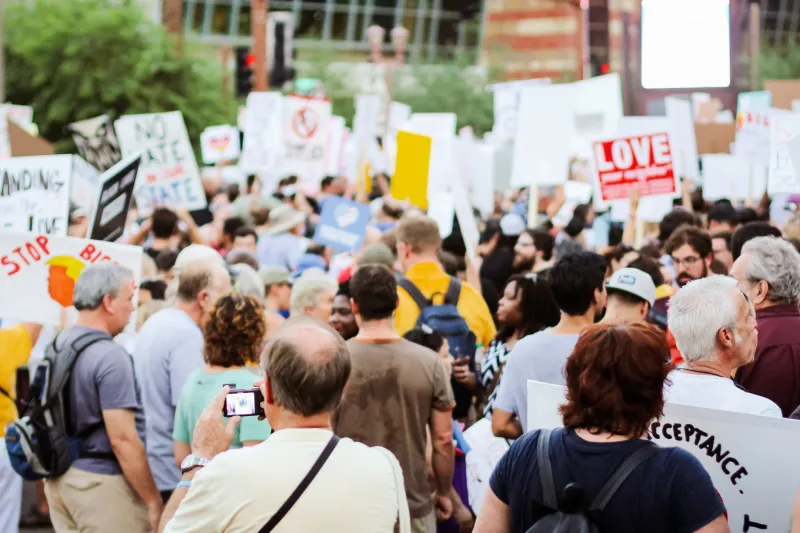
Yet across multiple states, something is shifting. Advocacy organizations — many of them founded by survivors themselves — are demanding that anonymity and accountability coexist. In Illinois, a coalition of survivors' rights groups successfully lobbied for legislation requiring that courts maintain a confidential victim registry, ensuring that even sealed-identity cases have a designated victim advocate assigned to monitor proceedings. In California, advocates have pushed for expanded notification rights, ensuring that anonymous victims are informed of parole hearings, sentence modifications, and case dismissals.
Perhaps most notably, a network of advocates in Texas — operating under the banner of the Jane/Jean Doe Justice Alliance — has spent the past three years compiling a database of unresolved cases in which victims were never formally identified or were identified only by pseudonym. Their work has resulted in the reopening of at least eleven cases and has drawn the attention of the state legislature's Criminal Justice Committee.
"The name doesn't matter as much as the acknowledgment," said one advocate affiliated with the Alliance, speaking on condition of anonymity. "What these victims want — what all victims want — is for someone in a position of authority to say: this happened, it mattered, and we are not going to let it disappear."
The Judicial Reform Conversation
The momentum generated by these grassroots campaigns has begun to filter into more formal policy discussions. In Washington, D.C., the bipartisan Crime Victims Fund Improvements Act has been cited by advocates as an opportunity to address gaps in services for anonymous victims — specifically, the absence of any federal mandate requiring agencies to track outcomes for individuals whose identities are sealed in federal proceedings.
At the state level, the conversation is even more active. At least fourteen states have introduced or passed legislation in the past five years that directly addresses the rights of victims who do not appear by name in public court records. These measures range from mandatory victim liaison appointments to provisions allowing anonymous victims to submit written impact statements that are read aloud — without attribution — during sentencing hearings.
Critics of these reforms argue that expanding victim participation in sealed-identity cases risks compromising the very protections anonymity is meant to provide. Defense attorneys, in particular, have raised concerns about due process implications when victim statements are introduced without the possibility of cross-examination or identity verification. These are legitimate legal questions that deserve serious consideration — but they should not be permitted to serve as a justification for inaction.
Jean Doe as Symbol and Catalyst
The designation "Jean Doe" carries particular resonance for our community. It is not merely a legal placeholder; it is a symbol of every victim who has been processed by a system that prioritized procedural efficiency over human dignity. The name Jean — chosen neither by the victim nor by those who loved them, but by a clerk filling out a form — has come to represent the thousands of individuals for whom justice remains incomplete precisely because no one was required to remember them.
That is why the work of organizations like Justice for Jean extends beyond any single case. We are part of a broader movement insisting that the legal system's obligation to victims does not end with the filing of a charge or the rendering of a verdict. True accountability requires ongoing recognition — the acknowledgment that behind every Doe designation is a person whose story deserves to be told, whose suffering deserves to be witnessed, and whose right to justice does not expire when the gavel falls.
What Comes Next
The path forward requires action on multiple fronts simultaneously. Legislative reform must be pursued at both the state and federal levels to standardize victim notification and advocacy requirements in anonymous cases. Courts must be held accountable for maintaining robust internal records that allow victim advocates to track case outcomes regardless of whether a victim's name appears in public filings. And communities must be educated about the systemic barriers that currently prevent anonymous victims from accessing the full range of rights and resources available to named survivors.
Most importantly, the movement must continue to grow. Every petition signed, every representative contacted, every community meeting attended adds to the collective pressure that forces institutions to change. The advocates in Texas, Illinois, and California did not achieve their victories through silence. They achieved them through sustained, organized, and unyielding demand for truth.
At Justice for Jean, we are committed to amplifying that demand — because no victim should have to fight for recognition from behind the veil of a name that was never truly their own.