Seven Proven Ways Your Community Can Turn Outrage Into Action for Local Justice Causes
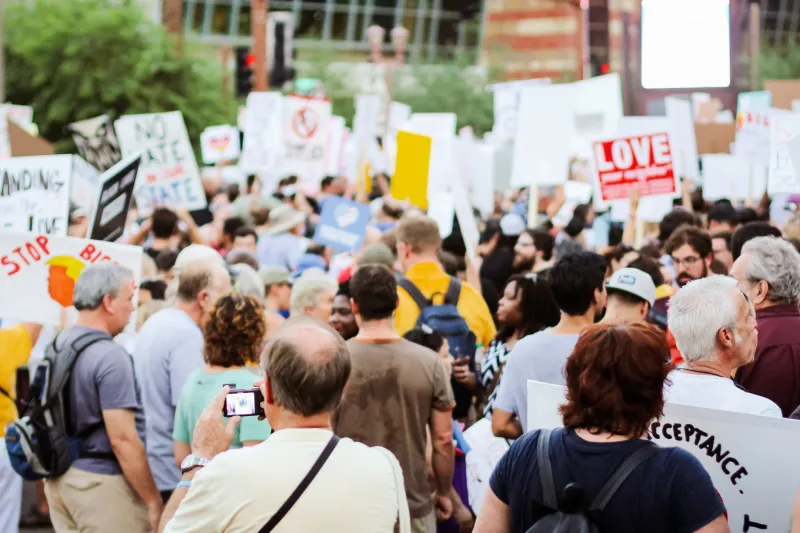
Awareness without action is just sorrow. At Justice for Jean, we have witnessed firsthand what happens when communities move beyond grief and frustration and begin channeling those emotions into organized, strategic advocacy. The results — legislative changes, case reopenings, institutional accountability — are real and achievable. But they require deliberate effort, coalition-building, and a clear understanding of how change actually happens in American civic life.
This guide is for the neighbor who attended one town hall and left feeling powerless. It is for the parent who signed a petition and wondered whether it made any difference. It is for the person who has been following a case like Jean's and feels called to do more than watch. These seven steps are drawn from the lived experience of grassroots movements that have successfully demanded truth and accountability — and they work.
1. Start With the Facts: Research Before You Organize
Effective advocacy is built on an unimpeachable factual foundation. Before you knock on a single door or draft a single social media post, invest time in understanding the specific injustice you are addressing. This means reading court documents, reviewing public records, consulting credible journalism, and — wherever possible — speaking directly with those closest to the cause.
In 2018, a group of parents in Kenosha, Wisconsin, launched a successful campaign to reform juvenile detention oversight after one of their children was harmed in a county facility. Their credibility with local media, elected officials, and the broader public rested almost entirely on the quality of their research. They arrived at every meeting with documented evidence, not just emotional appeals — and institutions took them seriously because of it.
When you know the facts deeply, you are also far better equipped to counter misinformation and resist efforts by institutions to muddy the waters.
2. Build Your Coalition Before You Need It
No single organization — no matter how passionate or well-resourced — achieves systemic change alone. The movements that succeed are almost always broad coalitions: survivors' groups partnering with faith communities, civil liberties organizations aligning with neighborhood associations, students joining forces with retirees.
Begin mapping your potential allies early. Who in your community shares a stake in this cause? Religious institutions, local chapters of national advocacy organizations, university law clinics, and labor unions are all potential partners. Reach out before you have a specific ask. Build relationships grounded in mutual respect and shared values, not transactional urgency.
The coalition that ultimately secured expanded victim rights legislation in Colorado in 2019 — known as Marsy's Law — included over sixty separate organizations, ranging from domestic violence shelters to chambers of commerce. Their diversity made them impossible to dismiss.
3. Contact Your Elected Representatives — Repeatedly and Strategically
Elected officials respond to constituent pressure, but that pressure must be sustained and strategic to be effective. A single email or phone call rarely moves the needle. What moves the needle is volume, consistency, and specificity.
Identify your state legislators, your county commissioners, and your U.S. Congressional representatives. Understand their committee assignments — a state senator who sits on the Judiciary Committee is a far more valuable contact for justice-related causes than one focused on agricultural policy. Request in-person meetings; they are far more impactful than written correspondence. Bring community members with you. Bring your documented evidence.
When contacting offices, be specific about what you want. "We demand justice" is a sentiment; "We are requesting that you co-sponsor House Bill 1147, which would require victim notification in sealed-identity cases" is an actionable ask. Specificity forces a response.
4. Launch a Petition Drive With Purpose
Online petitions have acquired an undeserved reputation for futility — and it is true that a petition alone rarely compels institutional change. But a well-executed petition campaign serves several critical functions: it demonstrates community support, it builds your contact list, it generates media attention, and it creates a documented record of public demand.
The key is to treat your petition as a tool within a broader strategy, not as an end in itself. Set a specific, achievable signature goal. Target your outreach to the geographic area most relevant to the cause — local signatures carry far more weight with local officials than national ones. And when you present your petition, do so in person, at a public meeting, with media present.
Activists in Louisville, Kentucky used a 12,000-signature petition as the centerpiece of a press conference that drew three local television stations and ultimately forced the city council to schedule a formal hearing on police accountability reforms. The petition did not win the fight — but it opened the door.
5. Use Social Media as an Organizing Tool, Not Just a Megaphone
Social media is most powerful when it facilitates real-world action rather than substituting for it. The goal of your online presence should be to move people from passive followers to active participants — attendees at rallies, signatories on petitions, constituents making phone calls.
Create consistent, visually coherent content that tells the human story behind the cause. Use platforms strategically: Facebook for community organizing and event promotion; Twitter/X for direct engagement with journalists and officials; Instagram for visual storytelling; TikTok for reaching younger audiences. Hashtag campaigns, when coordinated with offline actions, can generate significant media attention.
Crucially, document everything. Live-stream public meetings. Record confrontations with officials when legally permitted. Archive your posts. The digital record you create today may become evidence of institutional awareness — or institutional negligence — tomorrow.
6. Engage Local Media as a Strategic Partner
Journalists at local newspapers, television stations, and digital news outlets are among the most powerful allies available to community advocates — and they are frequently underutilized. A well-sourced, compelling local story can accomplish in one news cycle what months of quiet organizing cannot.
Cultivate relationships with reporters who cover courts, criminal justice, and local government. Offer them exclusive access to community meetings, documents, and affected individuals who are willing to speak on record. Understand their deadlines and their editorial constraints. Provide clear, accurate information and never mislead them — your credibility is your most valuable asset.
When the families of victims in the Doe Network cases received sustained local media coverage in Tennessee, the resulting public pressure compelled the district attorney's office to assign a dedicated cold case investigator to their files within four months. The investigative journalism did not solve the cases — but it created the accountability structure necessary for progress.
7. Sustain the Movement Through Institutional Memory
The single most common failure point of grassroots advocacy campaigns is the loss of momentum over time. Institutions are extraordinarily adept at waiting out community pressure, knowing that outrage tends to dissipate when immediate crises recede. The antidote is institutional memory: the deliberate, systematic preservation of your movement's history, commitments, and demands.
Document every meeting, every promise made by officials, every deadline established and missed. Maintain a living record of your coalition's work. Establish leadership succession plans so that the cause does not depend on the continued availability of any single individual. Mark anniversaries publicly. Return to officials who made commitments and demand updates.
Justice for Jean exists, in part, as an act of institutional memory — a refusal to allow the passage of time to normalize what should never be accepted. That same refusal must animate every community that chooses to stand up and fight.
The work of justice is not glamorous, and it is rarely swift. But it is possible — and it has always been ordinary people, organized and unwilling to be silenced, who have forced the most consequential changes in American civic life. Your community has that power. These seven steps are how you begin to use it.