From One Name to New Law: How Personal Justice Battles Have Rewritten State Policy
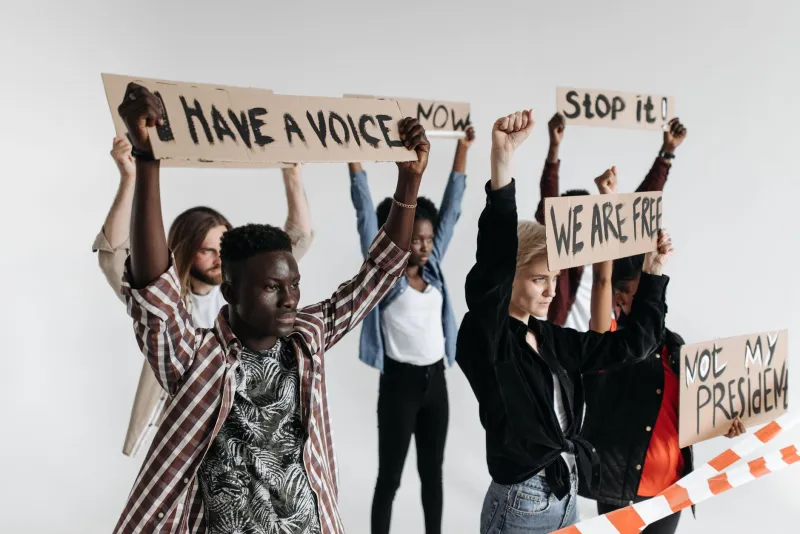
There is a particular kind of power embedded in a name. Not a statistic. Not a policy brief. A name — belonging to a real person, attached to a real story — has the capacity to move legislatures, shift public opinion, and rewrite the rules by which a state governs itself. At Justice for Jean, we have always understood this truth. Jean is not a symbol. Jean is a person. And persons, when their stories are told with clarity and sustained force, have changed the course of American law.
This investigation examines several documented cases in which individual justice struggles catalyzed statewide criminal justice reform, analyzing the specific mechanisms, timelines, and organizational strategies that made those campaigns effective. The goal is not simply to memorialize past victories — it is to extract a replicable framework that advocates, families, and communities can apply today.
The Anatomy of a Transformative Campaign
When Stephanie Neiman was murdered in Oklahoma in 2014, her family's refusal to remain silent helped sustain national attention on the state's botched execution procedures. While the policy outcome was complicated, the case demonstrated a foundational principle: sustained family advocacy forces institutional accountability in ways that abstract criticism cannot.
More instructive is the case of Hadiya Pendleton, a fifteen-year-old Chicago honor student shot and killed in January 2013 — just one week after performing at President Obama's inauguration. Her parents, Cleopatra and Nathaniel Pendleton, channeled their grief into a disciplined advocacy campaign. They testified before the Illinois state legislature, partnered with Everytown for Gun Safety, and ensured that Hadiya's name appeared in nearly every major legislative debate on gun violence in Illinois over the following two years. By 2014, Illinois had passed the Firearm Concealed Carry Act and strengthened provisions in its aggravated unlawful use of a weapon statute — changes that advocates directly linked to the sustained pressure generated by the Pendleton family's visibility.
The mechanics behind that visibility were not accidental.
The Three-Phase Model: Grief, Organization, Legislation
Cross-referencing multiple successful reform campaigns reveals a consistent three-phase structure that distinguishes movements that achieve policy change from those that fade after initial media attention.
Phase One: Narrative Consolidation. In the earliest weeks following an injustice, the most effective campaigns resist the urge to scatter their message across every available platform. Instead, they consolidate around a single, emotionally coherent narrative. This means identifying the one or two facts about the case that are simultaneously undeniable and morally unacceptable. For Hadiya Pendleton's family, it was the cruel irony of her proximity to presidential celebration and her subsequent death by street violence. For the family of Kalief Browder — a Bronx teenager who spent three years on Rikers Island without trial before his eventual suicide — it was the unambiguous cruelty of pretrial detention for a teenager accused of stealing a backpack. Both narratives were specific enough to be verified and broad enough to implicate systemic failure.
Phase Two: Institutional Alignment. No individual family can sustain a legislative campaign alone. The second phase requires the deliberate cultivation of institutional allies — civil rights organizations, faith communities, legal advocacy nonprofits, and sympathetic elected officials. Browder's story was amplified enormously when Jennifer Gonnerman's 2014 feature in The New Yorker brought it to a national audience, which in turn attracted the attention of Jay-Z, whose documentary on Browder's life aired on Time Warner Cable in 2017. That chain of amplification — from family to journalist to celebrity to documentary — is not luck. It is the product of advocates who understood how to move a story through successive layers of public attention.
In New York, the result was the passage of the Kalief Browder Laws, a package of reforms signed in 2017 that included strict new limits on solitary confinement for young people and accelerated trial timelines for juvenile defendants.
Phase Three: Legislative Specificity. The campaigns that actually produce new law are those that arrive at the statehouse with a specific, pre-drafted ask. Vague demands for "justice" or "accountability" give legislators room to offer symbolic gestures without substantive change. The most effective advocates commission or partner with legal experts to draft model legislation before they ever schedule a meeting with a state representative. They know which committee has jurisdiction. They know which co-sponsors are persuadable. They arrive not as petitioners but as informed constituents with a concrete proposal.
Timelines Matter More Than Momentum
One of the most counterintuitive lessons from studying these campaigns is that speed is rarely an asset. Legislative change in the United States is a slow, procedural process, and campaigns that burn intensely for three months and then collapse accomplish little beyond generating grief. The families and organizations that succeed are those that plan for a multi-year horizon from the outset.
The parents of Trayvon Martin — whose 2012 killing in Sanford, Florida, became one of the most consequential justice cases of the decade — did not achieve the legislative outcomes they sought in Florida, in part because the political environment of the state was inhospitable and the campaign's energy was not channeled into achievable state-level goals. However, their advocacy contributed directly to the national conversation that ultimately produced the First Step Act at the federal level in 2018. That is a six-year timeline. Advocates who enter this work expecting resolution within an election cycle are setting themselves up for devastating disappointment.
What Jean's Movement Can Replicate
The cases examined here share several elements that are directly applicable to the work being done on behalf of Jean. First, the story must be told consistently and in specific detail — not with embellishment, but with the kind of factual precision that makes it impossible for officials to dismiss. Second, the campaign must build institutional relationships before it needs them, not in the moment of crisis. Third, the legislative ask must be concrete, drafted in advance, and championed by at least one elected ally who is willing to stake political capital on the outcome.
Justice for Jean is not simply a memorial. It is a campaign. And campaigns, when structured with discipline and sustained with community support, have rewritten the law before. They will do so again.
The history of American criminal justice reform is, at its core, a history of names that refused to be forgotten. Jean's name belongs in that history. Our task is to ensure it gets there.