The Invisible Victims: Who Gets Coverage and Who Gets Silence — and What Advocates Can Do About It
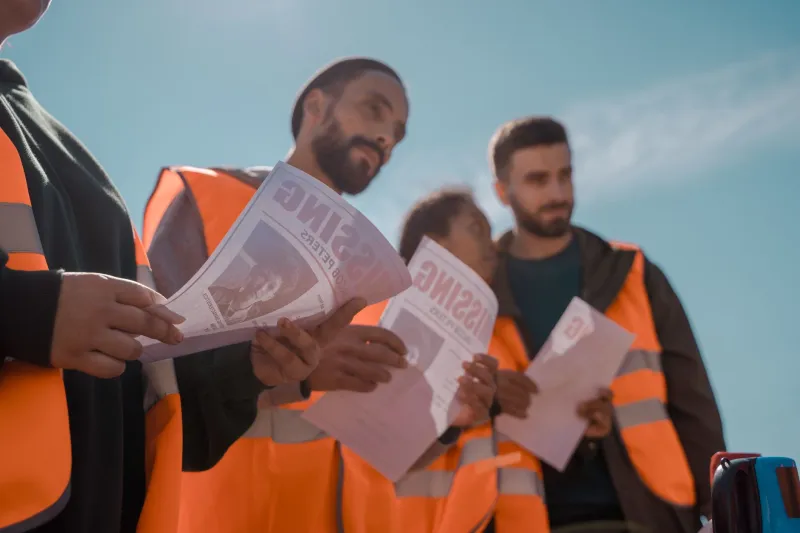
If you have spent any time fighting for Jean — writing letters, sharing posts, calling local representatives — you have likely encountered a wall that feels less like indifference and more like a decision. Because in many cases, that is precisely what it is. The absence of news coverage for certain victims is not a passive oversight. It is the cumulative result of editorial choices, resource constraints, audience assumptions, and, in some cases, outright bias. Understanding how that wall is built is the first step toward tearing it down.
At Justice for Jean, we believe that visibility is not a privilege reserved for the conventionally sympathetic victim. It is a right. And when the press will not grant it, communities must claim it.
The Documented Disparity
The research on unequal media coverage of missing persons and criminal cases is neither new nor ambiguous. A 2016 study published in the academic journal Crime & Delinquency found that cases involving white victims received significantly more news coverage than cases involving victims of color, even after controlling for variables such as case solvability and law enforcement involvement. The phenomenon is so well-documented that criminologists have assigned it a name: "Missing White Woman Syndrome," a term popularized by the late journalist Gwen Ifill to describe the disproportionate media attention granted to white, typically young, conventionally attractive women who go missing.
But the disparity extends well beyond race. Victims who are unhoused, who have prior criminal records, who work in industries stigmatized by mainstream culture, or who disappear from rural communities with limited local press infrastructure are systematically underrepresented in news coverage. The National Missing and Unidentified Persons System (NamUs) contains thousands of cases that have never been the subject of a single news article. Many of those cases belong to Native American women, Black men, and LGBTQ+ youth — populations for whom the press has historically functioned as an absent witness.
How Newsrooms Make These Choices
It is worth understanding the internal logic of editorial gatekeeping, not to excuse it, but to work around it more effectively.
Newsrooms — particularly local television stations and regional newspapers — operate under severe resource constraints. Assignment editors make rapid decisions about which stories to pursue based on a set of informal heuristics: Is there a visual component? Is there a spokesperson who can speak on camera? Does the story fit an existing narrative frame that audiences already understand? Is there law enforcement cooperation, which lends the story institutional credibility?
Cases that lack these elements are routinely deprioritized. A family that cannot afford a media consultant, a victim who has no prominent community ties, a case in which law enforcement is uncooperative or actively hostile — all of these factors reduce a story's perceived "producibility" in the eyes of a busy assignment editor.
Furthermore, the consolidation of local media ownership over the past two decades has dramatically reduced the number of reporters available to cover community-level stories. Sinclair Broadcast Group, for example, owns or operates more than 180 television stations across the United States. When corporate ownership prioritizes standardized content over local investigative work, the cases that most depend on sustained local attention are the first to disappear from the news cycle.
Social Media as a Parallel Press
The good news — and there is genuine good news here — is that the gatekeeping function of traditional media has been substantially disrupted by social platforms, and advocates have learned to exploit that disruption with considerable skill.
The 2020 disappearance and murder of Ahmaud Arbery in Brunswick, Georgia, was ignored by local news outlets for nearly two months. It was the circulation of a cellphone video on social media, shared by activists and eventually picked up by national outlets, that forced the story into public consciousness and ultimately led to the arrests of the perpetrators. Similarly, the 2021 disappearance of Gabby Petito — which itself drew criticism for the disproportionate attention it received relative to cases involving women of color — demonstrated how coordinated social media activity can overwhelm traditional editorial gatekeeping entirely.
For advocates working on behalf of Jean, this precedent is instructive. Social media is not a consolation prize for cases the mainstream press ignores. It is an independent publishing infrastructure with the demonstrated capacity to force institutional accountability.
A Field Guide for Advocates: Generating Sustained Attention
The following strategies are drawn from documented campaigns that successfully generated media coverage and public pressure when traditional outlets initially declined to engage.
1. Create a Centralized, Credible Digital Presence. Before launching any outreach campaign, establish a single authoritative website or landing page — like this one — that presents the facts of the case clearly, cites verifiable sources, and provides a consistent point of contact for journalists, officials, and the public. Fragmented information spread across multiple social profiles is far easier for newsrooms to dismiss as unreliable.
2. Develop a Media Contact List and Work It Systematically. Identify journalists — not just outlets — who have a documented history of covering underrepresented victims or criminal justice issues. Reporters at ProPublica, The Marshall Project, and local alt-weeklies are often more receptive than assignment editors at network affiliates. Send personalized, fact-specific pitches. Follow up exactly once. Then move to the next contact.
3. Use Anniversary Dates as News Hooks. Mainstream journalism is driven by the news cycle, and the news cycle responds to calendar events. The one-month, six-month, and one-year anniversaries of an injustice are natural moments for renewed coverage. Plan community events — vigils, press conferences, petition deliveries — to coincide with these dates and issue formal press releases at least five business days in advance.
4. Build Coalitions With Organizations That Have Existing Media Relationships. A press release from a single family carries less institutional weight than one co-signed by a recognized civil rights organization, a faith community, or a university research center. Reach out to groups whose missions align with your cause and ask them to formally lend their name and platform.
5. Document Everything and Publish It Yourself. If the press will not cover a story, advocates must become the press. Video documentation of community events, written timelines of official failures, and recorded interviews with witnesses and experts can all be published directly on advocacy websites and social platforms. This content serves a dual purpose: it builds a public record, and it gives journalists a pre-reported foundation from which to work when they eventually decide to cover the story.
6. Target Decision-Makers Directly and Publicly. When a sheriff's office declines to investigate, when a district attorney refuses to prosecute, when a city council ignores a petition — name them. Public accountability, pursued with factual precision and documented evidence, generates the kind of conflict that newsrooms are structurally designed to cover.
Silence Is Not Neutral
Every day that Jean's story goes untold is a day that official inaction is allowed to continue without scrutiny. Media silence is not a neutral absence — it is a condition that benefits those who prefer that this case remain unexamined.
The tools to break that silence exist. The communities willing to use them exist. What is needed now is the discipline to deploy those tools strategically, persistently, and without waiting for permission from institutions that have already demonstrated their reluctance to help.
One voice. One fight. That is where every successful campaign begins. It is where ours continues.