Keyboards as Courtrooms: How Online Communities Are Breathing New Life Into America's Most Neglected Cases

Photo: Ggia, CC BY-SA 4.0, via Wikimedia Commons
For the family of a victim whose case has gone cold, the silence from official channels can feel absolute. Detectives move on to newer crimes. Prosecutors defer to heavier dockets. The press finds fresher tragedies to cover. And yet, in the quiet corners of the internet — inside subreddits with thousands of subscribers, Discord servers organized with the precision of small newsrooms, and private Facebook groups governed by strict community rules — something remarkable is happening. Cases that institutions abandoned are being reopened, not by law enforcement, but by ordinary Americans armed with nothing more than a laptop, a broadband connection, and an unrelenting sense of moral obligation.
At Justice for Jean, we have watched this phenomenon unfold with both admiration and a critical eye. The movement to demand accountability for Jean is itself a product of this digital energy. But the broader ecosystem of online investigative communities raises urgent questions about methodology, ethics, and the very real dangers that arise when passionate amateurs wade into the waters of criminal investigation.
The Architecture of a Digital Cold Case Community
These online groups are not the chaotic, rumor-fueled forums of popular imagination. The most effective among them operate with structures that would not look entirely out of place in a professional newsroom. Moderators enforce strict evidence-sourcing rules. Members are often prohibited from naming living suspects without documented public-record support. Dedicated channels separate confirmed facts from working theories. Some communities even maintain internal wikis that catalog every known detail of a case — court documents, news archives, geographic data, and timelines — accessible to any member who joins.
The subreddit model, popularized by communities dedicated to cases like Asha Degree and the Zodiac Killer, has demonstrated that crowd-sourced research can surface genuinely overlooked details. A member in Ohio might cross-reference a decade-old newspaper clipping with a public property record and identify a witness who was never formally interviewed. Another, trained as a paralegal, might flag a procedural irregularity in the original prosecution. These are not trivial contributions. In several documented instances, tips originating from online communities have prompted law enforcement agencies to reopen formal inquiries.
Discord servers have taken this model a step further, enabling real-time collaboration across time zones. Unlike the asynchronous nature of Reddit threads, Discord allows teams to convene, debate evidence, and divide research tasks with a speed and coordination that mirrors investigative journalism at its most agile.
Where Digital Activism Has Delivered Real Results
The wins are real, and they deserve acknowledgment. Online advocacy communities have successfully pressured media outlets to cover cases that had been entirely ignored. They have crowdfunded legal resources for families who could not otherwise afford representation. They have compiled FOIA request templates, distributed them to hundreds of members simultaneously, and generated enough institutional pressure to compel agencies to release records they had quietly buried.
In several high-profile instances, digital communities identified geographic or behavioral patterns that investigators had not publicly addressed, leading to renewed scrutiny of specific evidence. Families who felt utterly isolated have found in these spaces both practical support and the profound psychological relief of knowing that strangers — hundreds or thousands of them — refuse to allow their loved one's story to be forgotten.
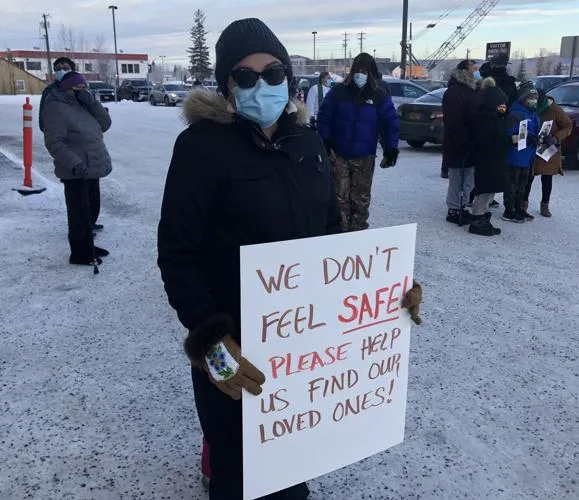
For the Justice for Jean movement, the parallel is direct. The sustained visibility of Jean's case owes no small debt to the digital communities that amplified early calls for accountability, shared petitions across platforms, and organized coordinated outreach campaigns to elected officials. Without that infrastructure, the movement would be considerably smaller and considerably quieter.
The Ethical Fault Lines
And yet, the risks are neither hypothetical nor minor. The same enthusiasm that drives these communities to remarkable investigative feats can, when left unchecked, cause serious harm.
The most dangerous tendency is the premature identification of suspects. Online communities have, on multiple occasions, coalesced around an individual as the likely perpetrator of a crime — only to be demonstrably wrong. The consequences for those wrongly targeted range from harassment and death threats to lasting reputational destruction. In at least one case, an innocent man's family was driven from their home by the pressure generated from an online community's misidentification. These are not abstractions. They are cautionary chapters that every digital activist must internalize.
There is also the question of evidentiary contamination. When thousands of amateur investigators publicly discuss case details, speculate about witness motivations, or contact individuals connected to a case, they can inadvertently compromise the integrity of evidence and the reliability of future testimony. Prosecutors have cited online community interference as a complicating factor in active investigations. The line between advocacy and obstruction, while legally distinct, can blur in practice.
Privacy concerns add another layer of complexity. Public records research, when aggregated with social media data and satellite imagery tools that are now freely available, allows online investigators to build profiles of private individuals with a thoroughness that raises genuine civil liberties concerns — even when those individuals are persons of legitimate investigative interest.
A Framework for Responsible Digital Advocacy
None of these risks argue for abandoning the digital advocacy model. They argue for refining it. The communities that have earned lasting credibility are those that have voluntarily adopted rigorous internal standards: prohibitions on naming unconfirmed suspects, mandatory source citation, clear distinctions between evidence and inference, and explicit discouragement of direct contact with individuals connected to active cases.
At Justice for Jean, we advocate for a digital activism culture that is as disciplined as it is passionate. Demanding accountability from institutions requires that advocates themselves remain accountable — to the truth, to the privacy of individuals, and to the legal processes through which justice must ultimately be delivered. Enthusiasm is not a substitute for rigor. Moral certainty is not a substitute for evidence.
The families at the center of these cases deserve advocates who amplify their cause without introducing new complications into it. That means doing the unglamorous work of verifying before sharing, pausing before accusing, and recognizing that the goal is not to solve a case in a Discord channel — it is to ensure that the institutions responsible for solving it cannot continue to look away.
The Movement Continues
The digital underground where forgotten cases find new life is neither wholly heroic nor wholly reckless. It is a genuinely novel form of civic participation, evolving in real time, producing real outcomes, and carrying real responsibilities. For every family that has found renewed hope through an online community's sustained attention, there is a hard-won lesson about the dangers of unchecked certainty.
Justice for Jean exists because one name, one case, and one community of committed voices can change what institutions are willing to do. That principle scales. It works. But it works best when the people who carry it forward hold themselves to the same standard of accountability they demand from the systems they challenge.
The keyboards are powerful. The question is whether the hands on them are ready for that responsibility.