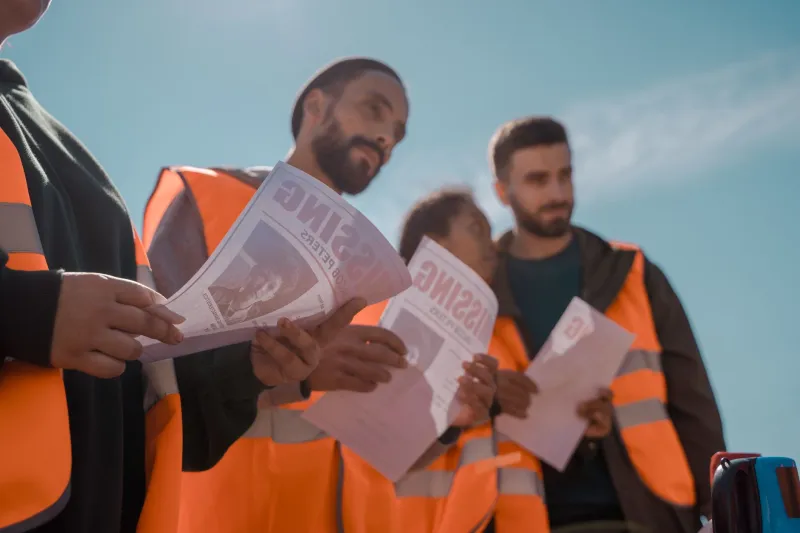
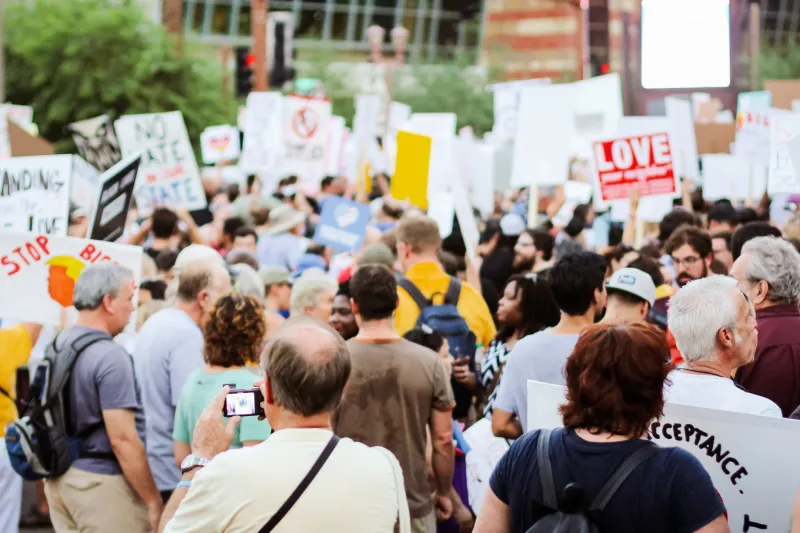
Strangers United: How the Justice for Jean Movement Lit a Fire Under Thousands of Forgotten Cases

Photo: Holger Krisp, CC BY 3.0, via Wikimedia Commons
In a modest living room in Akron, Ohio, Maria Delgado keeps a folder she calls her "fight file." Inside are photocopied court documents, handwritten timelines, and a printed screenshot of the Justice for Jean website — the page she says she returned to again and again during the darkest months of her own struggle to reopen her brother's stalled wrongful death case. She had never met Jean. She had no direct connection to the cause. But she credits the movement with something she describes, quietly and without hesitation, as "permission to keep going."
Delgado's experience is not an isolated one. Over the past several years, the Justice for Jean movement has generated a secondary wave of advocacy that its founders may not have fully anticipated — one that ripples outward from a single name and a single case into the lives of strangers navigating their own encounters with institutional indifference. Across message boards, community organizing meetings, and courthouse hallways from Mississippi to Montana, advocates and family members are invoking this movement as both a moral framework and a tactical guide.
The Mechanics of Inspiration
To understand how one person's fight becomes another's roadmap, it helps to examine what the Justice for Jean movement has made visible. Before sustained public advocacy forced the issue into the open, countless families assumed that a closed case was simply a closed case — that institutional decisions were immovable, that bureaucratic silence was a verdict unto itself. What movements like this one demonstrate, in practical and undeniable terms, is that institutions respond to organized, sustained, and visible pressure.
"There's a before and an after for a lot of families," says Renata Osei, a community legal advocate based in Atlanta who works with families of victims in unresolved cases. "Before they encounter a movement like Justice for Jean, they think the system has spoken. After, they start to understand that the system is made of people, and people can be held accountable."
Osei has watched this transformation occur repeatedly in her own work. Families who once accepted dismissal letters from district attorneys as final now arrive at her office with organized evidence packets and detailed questions about their legal options. Some explicitly cite the Justice for Jean movement as the reason they returned to fight.
When a Name Becomes a Template
The power of a named, humanized case should not be underestimated in the American advocacy landscape. Abstract statistics about case abandonment rates or systemic failures in law enforcement rarely move people to action the way a specific human story does. Jean is not a statistic. Jean is a person — and that specificity carries enormous weight for strangers who are themselves fighting to keep a person's memory and case alive.
Thomas Whitfield, whose daughter's case in rural Tennessee went cold within eighteen months of her death, described the effect plainly in a recent interview. "When I read about what Jean's family went through — the stonewalling, the bureaucratic runaround, the way they were made to feel like they were the problem — I recognized every single moment," he said. "And then I saw that they didn't stop. They organized. They got loud. I thought: if they can do that, I can do that."
Whitfield subsequently connected with a statewide victims' advocacy coalition, retained a civil rights attorney to review his daughter's case file, and filed a formal complaint with the state attorney general's office. He attributes none of that momentum to any single resource or advisor. He attributes it to witnessing someone else refuse to accept silence.
The Infrastructure of Solidarity
What distinguishes the current moment from earlier waves of individual justice advocacy is the availability of infrastructure — digital platforms, national advocacy networks, and a growing body of legal strategy developed through cases exactly like Jean's. Movements that once burned brightly and then faded in isolation now feed into something more durable.
Advocacy organizations that operate in the orbit of cases like Jean's have begun deliberately documenting their strategies and making them available to families in similar circumstances. Template letters to elected officials. Guides to filing public records requests under state freedom of information laws. Step-by-step explanations of how to engage local media without compromising ongoing legal efforts. These are not abstract resources — they are the distilled lessons of hard-fought battles, passed forward to people who are just beginning theirs.
"We talk about the Jean effect internally," says one advocate affiliated with a Midwest victims' rights organization, who asked not to be identified by name due to ongoing litigation. "It's shorthand for what happens when a movement reaches critical mass and starts pulling in people who weren't originally part of it. The energy becomes self-sustaining."
The Emotional Geography of Borrowed Courage
There is also something harder to quantify at work — something that sits at the intersection of grief, solidarity, and human psychology. Families in the midst of stalled justice cases frequently describe a specific kind of exhaustion: the fatigue of fighting an institution that seems designed to outlast individual human stamina. Bureaucracies do not grieve. They do not tire. They simply persist, and they rely on individuals eventually doing the same.
What witnessing another family's sustained resistance offers is a counter-narrative to that exhaustion. It is evidence — living, documented, ongoing evidence — that persistence is possible. That institutions do sometimes bend. That the system, for all its weight, is not entirely immune to the organized demands of people who refuse to disappear.
Maria Delgado, back in Akron, says she has started her own informal network. She exchanges information with three other families in northeastern Ohio who are fighting similar battles. None of them knew each other before their cases stalled. All of them found each other through the same circuitous route: a shared recognition of their own circumstances in someone else's story.
"I tell people: you don't have to know Jean to understand what Jean's family is fighting for," she says. "You just have to recognize the wall they hit. Because if you're in this situation, you've hit the same wall."
What This Means for the Movement Itself
For those at the center of the Justice for Jean effort, the expansion of the movement's reach into unrelated cases carries both responsibility and resolve. Every family that cites Jean's name in their own fight extends the stakes of this work beyond any single case. It transforms individual advocacy into something closer to a standard — a public declaration that no case should be abandoned, no family should be silenced, and no institution should mistake silence for consent.
The work ahead is not small. But the evidence suggests that the community being built around it is larger, and more determined, than anyone anticipated.
One voice, it turns out, has a very long reach.