No One Left to Look: The Coroner Races and Lab Vacancies Deciding Whether a Death Is Ever Examined
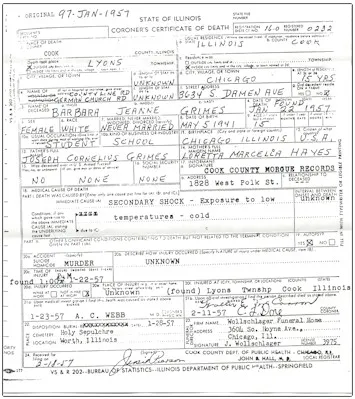
Photo: Cook County Medical Examiner, Public domain, via Wikimedia Commons
The wait for an autopsy report in one rural county is measured in months, because the nearest board-certified forensic pathologist covers three counties and a state highway. In a city of more than a million, two pathologists rotate through a case load that professional standards would assign to four or five. And in a handful of jurisdictions, the person signing the death certificate is an elected official with no medical training at all.
America's death investigation system is not one system. It is thousands of local arrangements, some excellent, some barely staffed, and the gap between them is measured in cases that were never properly examined — including cases that were never recognized as homicides.
The arithmetic of the shortage
The professional consensus is straightforward: the country trains and certifies far fewer forensic pathologists than it needs. The field's own professional organizations have estimated the practicing workforce in the hundreds when something closer to a thousand is required to meet demand. Residency slots are limited because training programs require accredited facilities and faculty who are themselves in short supply. The pipeline problem compounds every year that it goes unfunded.
The consequences are concrete. When a pathologist is stretched to two or three times a reasonable caseload, scene response becomes rare. Toxicology gets batched. Manner-of-death determinations get conservative, which is to say deaths get categorized as undetermined or natural when a careful examination might have said otherwise. A homicide that is recorded as an accidental overdose or an undetermined death does not generate a homicide investigation, and a family that suspects foul play is left arguing with a certificate.
In rural areas the geography is brutal. Bodies travel hundreds of miles. Families wait weeks for a preliminary report. Some states rely on coroners who are elected, sometimes without any requirement of medical licensure, and who contract with a distant pathologist for examinations.
The offices on your ballot
This is where Election Watch matters. In more than a dozen states, coroners are elected officials, and the qualifications required to hold the office vary enormously — from board-certified physicians in some jurisdictions to essentially none in others. These are low-turnout, low-information races that decide, quite literally, how the dead are counted.
Medical examiner systems are typically appointed rather than elected, which moves the decision into budget hearings and county executive offices rather than the ballot. Either way, the questions are the same and almost never asked at candidate forums:
- How many board-certified forensic pathologists does the office employ, and what is the annual caseload per pathologist?
- Is the office accredited by the national professional body, and if not, why not?
- What is the average turnaround time for a full autopsy report, including toxicology?
- Does the office respond to scenes, and how quickly?
- How many death certificates were amended in the past three years, and in which direction?
Asking those five questions in public, on the record, changes the incentives. Candidates who cannot answer them learn that someone is paying attention.
What a family can do when the answer is wrong
Jean's case is a reminder that the autopsy is not the end of the record; it is a document that can be challenged.
Obtain the complete file, not the summary. Request the full autopsy report, the investigator's report, photographs, toxicology results, and the chain of custody for retained specimens. Most jurisdictions have a formal request process; use it in writing and keep the receipt.
Ask whether specimens were retained, and for how long. Blood, urine, and tissue can be reanalyzed years later. Retention periods vary widely and are sometimes short. Ask early.
Request an amendment in writing. If new information exists — a witness, a medical record, a prior injury — submit it formally and ask that the file reflect it. A documented request creates a record even when it is refused.
Pursue a second autopsy, or a review if burial has occurred. A private forensic pathologist can review the existing file and images without exhumation in many cases, at a cost that typically runs into the low thousands. Where exhumation is necessary, a court order is usually required and the rules vary by state.
Ask about an inquest or independent review. Some states provide for coroner's inquests or county-level review mechanisms. Ask your county attorney or a legal aid clinic what exists where you live.
Follow the money. Attend the budget hearing where the medical examiner's office is funded. Ask how many positions are vacant and how long they have been vacant. Vacancy data is public and it is persuasive.
The longer fight
Fixing this is not mysterious. It requires funded residency positions, accreditation standards with teeth, minimum training requirements for elected coroners, and independent review for families who believe a determination was wrong. Those are legislative questions, and legislators respond to constituents who show up with a case file and a question.
Jean's family has spent years asking a system to look again. The least the rest of us can do is make sure there is someone left in the room whose job is to look.
One voice. One fight. Demand the truth.