The Database Is the Detective Now: Who Owns the Data That Could Reopen a Cold Case
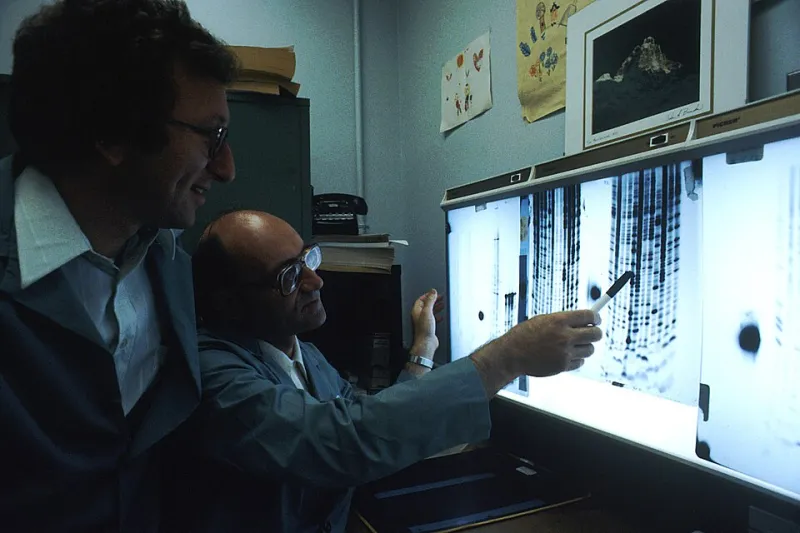
Photo: Linda Bartlett (Photographer), Public domain, via Wikimedia Commons
For years, the answer Jean's family received was the same one thousands of American families receive: the evidence had been tested, the leads had been exhausted, the file was closed but not forgotten. Then, in the space of a few months, a technology that did not exist when the case was opened turned a degraded sample into a surname.
That is the promise of investigative genetic genealogy — and of the predictive software now being sold to police departments as a way to rank which cold cases are worth a detective's time. The promise is real. So is the unevenness. Whether your case gets that treatment depends less on the merits of the evidence than on where the file sits, who is willing to pay, and which vendor's terms of service happen to govern the data.
How the machinery actually works
Traditional forensic DNA testing compares a sample against a defined set of profiles and returns a match or nothing. Investigative genetic genealogy does something different. Labs sequence hundreds of thousands of markers across the genome, upload the resulting profile to a consumer database where users have opted in, and then work backward through family trees — cousins, second cousins, great-aunts — until the tree narrows to a plausible identity. A conventional DNA sample then confirms it.
The second layer is quieter and, in some ways, more consequential. Several companies now market case-triage software to law enforcement: scoring systems that weigh evidence quality, witness availability, geography, and solvability to decide which of a department's hundreds of cold files get attention first. Vendors describe it as decision support. Critics describe it as an algorithm deciding whose death is worth investigating, trained on data nobody outside the department can inspect.
The consent question nobody settled
Consumer genetic databases are not public utilities. They are private companies with terms of service that change. Some require explicit opt-in for law enforcement matching; others have shifted defaults over time. The result is a patchwork in which the same DNA profile may be searchable in one state and off-limits in another.
Federal guidance exists, but it is guidance — an internal Department of Justice policy, not a statute. It limits genealogical searching to violent crimes, requires that standard techniques be tried first, and places conditions on which databases may be used. A policy memo can be rewritten by the next attorney general. A handful of states, Maryland first among them, have converted parts of that guidance into law; others have moved in the opposite direction, broadening access. Most states have done nothing at all.
The unresolved questions are the ones families should be asking about directly:
- Does the laboratory retain the genetic profile after the case concludes, and for how long?
- Can that profile be searched again in an unrelated investigation?
- Who is notified if a distant relative's DNA becomes the thread that unravels a family secret?
- What happens to the data if the vendor is acquired or goes bankrupt?
Access is a budget line, not a right
Genealogical sequencing and the hours of genealogist labor that follow can run from a few thousand dollars to well over ten thousand per case. Some agencies absorb that cost. Many cannot, or will not. Grant programs have helped, but they are competitive and cyclical, and a rural department with one overworked investigator is rarely in a position to write a persuasive application.
The practical outcome is a two-tier system: departments with resources and appetite pursue these cases; departments without them file the same letter again. Jean's case, like thousands of others, sits on the wrong side of that line unless someone pushes.
What advocates can demand — in writing
Families are not powerless here, but the leverage comes from specificity. Vague requests get vague answers.
Demand an evidence inventory. Ask, in writing, whether biological evidence has been tested, when, with what method, and whether any profile has ever been uploaded to any database — consumer or law enforcement. Ask for the lab report, not a summary of it.
Ask for the data retention policy. Any vendor contract should specify retention, permissible secondary use, and destruction. If the policy does not exist, that absence is itself a finding worth publicizing.
Insist on notification. Ask that the family be told if genealogical searching is used in their case, and by whom.
Use public records law. Contracts with sequencing vendors, memorandum of understanding with labs, and grant applications are generally obtainable. The paperwork often reveals more than the press release.
Push legislators for statute, not sentiment. A state law requiring consent-based database access, a warrant requirement for genealogical searches, and mandatory family notification would outlast any administration's memo.
The tools are not the enemy. Secrecy is. A case that can be solved by an algorithm is a case that can be documented, audited, and demanded — and that is exactly what this campaign intends to do for Jean.