The Closing Clock: How Statute of Limitations Laws Are Quietly Erasing Justice — and the Advocates Pushing Back
Imagine learning that the person who harmed someone you love cannot be prosecuted. Not because evidence is insufficient. Not because witnesses are unavailable. But because a legal deadline, embedded in state law and invisible to most Americans, has quietly expired — and with it, any possibility of accountability.
This is not a hypothetical. It is a reality that plays out with devastating regularity in courthouses across the United States, and it is one of the most consequential — and least discussed — barriers to justice in our legal system.
Statute of limitations laws establish the maximum period after an alleged offense during which prosecutors may file criminal charges. These laws exist, in theory, to protect defendants from the unfairness of defending against accusations so old that evidence has degraded and memories have dimmed. The principle is not without merit. But the application, in case after case, has produced outcomes that mock the very concept of justice.
How the Clock Works — and Who It Protects
Statute of limitations periods vary dramatically by offense and by state. In many jurisdictions, the clock begins running on the date of the alleged crime, regardless of when it is discovered. For crimes involving concealment — fraud, certain forms of sexual abuse, crimes in which the perpetrator actively hid their conduct — this means the clock may expire before the victim or law enforcement even becomes aware that a crime occurred.
For serious violent felonies, many states have eliminated statutes of limitations entirely. Murder, for example, carries no filing deadline in the vast majority of American jurisdictions. But for a broad range of other serious offenses — including certain categories of sexual assault, financial crimes, and crimes against children — deadlines remain, and they continue to close the door on justice with mechanical indifference.
The consequences are not abstract. Prosecutors across the country regularly decline to file charges in cases where evidence is compelling and suspect identity is known — not because the case lacks merit, but because the statutory clock has run out. Perpetrators who know this walk free with legal impunity. Victims are told, in effect, that their experience of harm has an expiration date.
The Landscape: A State-by-State Divide
The variation in statute of limitations law across American states is vast and, from an equity standpoint, deeply troubling.
California eliminated its statute of limitations for rape and other serious sexual offenses in 2016, a landmark reform driven by survivor advocacy following the exposure of institutional sexual abuse across multiple sectors. New York enacted significant reforms in 2019, extending and in some cases eliminating deadlines for child sexual abuse crimes. Maryland, in 2023, eliminated the civil statute of limitations for childhood sexual abuse entirely.
But dozens of states lag significantly behind. In several Southern and Midwestern states, statutes of limitations for serious sexual offenses remain as short as three to five years from the date of the offense — a period that research consistently demonstrates falls within the window during which most survivors are still processing trauma and are not yet prepared to report. In states where the clock runs from the date of the crime rather than the date of discovery, survivors who come forward after years of silence may find that the law offers them nothing.
For financial crimes and certain categories of fraud, the picture is similarly uneven. White-collar offenses that take years to fully surface frequently hit statutory deadlines before investigators have assembled a complete evidentiary picture. Prosecutors may know a crime occurred. They may know who committed it. The statute of limitations forecloses the case regardless.
Why Lawmakers Resist Reform
The arguments against statute of limitations reform are familiar and, to advocates who have heard them repeatedly, increasingly hollow.
Defense attorneys argue that extending or eliminating filing deadlines prejudices defendants by forcing them to defend against old accusations with degraded evidence and faded witness memories. The concern is legitimate in the abstract. But it ignores the reality that modern forensic technology — DNA analysis, digital records, financial documentation — has fundamentally altered the evidentiary landscape. Evidence that would have been lost to time in 1985 may be perfectly preserved in a digital record in 2025.
Legislators also cite the administrative burden of reopening old cases and the resource implications for already-strained prosecutor offices. This argument is frankly difficult to take seriously in the context of a conversation about justice. The resource burden of prosecution is a policy problem with policy solutions. It is not a moral justification for allowing perpetrators to escape accountability.
Perhaps most honestly, some lawmakers acknowledge that statute of limitations reform generates institutional resistance from the same professional networks — law enforcement associations, defense bar lobbying groups, insurance industry interests in civil cases — that benefit from the existing framework. Reform threatens settled expectations. And settled expectations, in legislative chambers, carry considerable weight.
The Reform Playbook: How Advocates Have Won
Despite institutional resistance, the trajectory of statute of limitations reform over the past decade is unmistakably positive for advocates. The reforms enacted in California, New York, Maryland, and a growing number of other states did not happen spontaneously. They were the product of sustained, organized advocacy that followed a recognizable pattern.
Successful reform campaigns have consistently centered survivor testimony. Abstract arguments about legal fairness move legislators incrementally. Personal testimony from survivors whose cases were closed by statutory deadlines — whose perpetrators walked free not because of insufficient evidence but because of an expired clock — creates the moral urgency that drives legislative action.
They have also built broad coalitions. Statute of limitations reform has attracted unlikely alliances: survivors' advocacy organizations, child welfare groups, religious institutions confronting their own histories of abuse, and, increasingly, law enforcement associations that recognize the investigative value of extended filing windows. Advocates who frame reform as a law enforcement tool — enabling prosecutors to use modern forensic technology to solve old crimes — often find allies in places they did not expect.
Effective campaigns engage the legislative process at multiple levels simultaneously. They work with sympathetic legislators to introduce bills, track those bills through committee, and organize constituent pressure at critical junctures. They commission legal analyses that preemptively address constitutional objections. They build media relationships that keep the issue visible between legislative sessions.
And they are relentless. Most successful statute of limitations reforms required multiple legislative sessions, repeated bill introductions, and years of sustained advocacy before achieving passage. The families and organizations that succeeded did so because they refused to accept a single legislative defeat as a final answer.
What Advocates Can Do Right Now
For families and advocates operating in states where statute of limitations laws continue to shield perpetrators, the path forward requires both immediate tactical action and long-term strategic commitment.
Begin by mapping your state's current statute of limitations framework in precise detail. Know the applicable deadline for your specific offense category. Know when that clock began running and when it will expire or has already expired. This information, gathered with the assistance of a licensed attorney, is the foundation of every subsequent decision.
Connect with national organizations that specialize in statute of limitations reform advocacy. CHILD USA, a nonprofit think tank focused on child protection policy, maintains comprehensive state-by-state data and has been directly involved in reform campaigns across the country. The National Center for Victims of Crime provides advocacy resources and legislative tracking tools.
Engage your state legislators directly and specifically. Do not write a general letter about justice. Write a specific letter about the specific statute of limitations provision that applies to your case, the specific harm it has caused, and the specific reform you are requesting. Personal specificity is the currency of effective legislative advocacy.
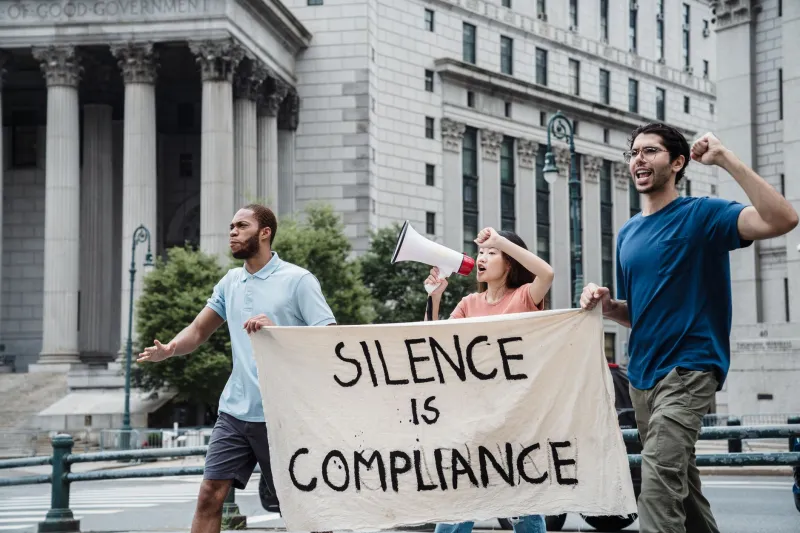
And build community. The most powerful force in statute of limitations reform has consistently been the organized, sustained voice of people who have experienced the injustice directly — people who understand, as the Justice for Jean community understands, that silence is not an option and that the closing clock demands a response.
The deadline may be running. But so is the movement to stop it.