Proof Without Power: Why Compelling Evidence Alone Cannot Unlock a Stalled Case
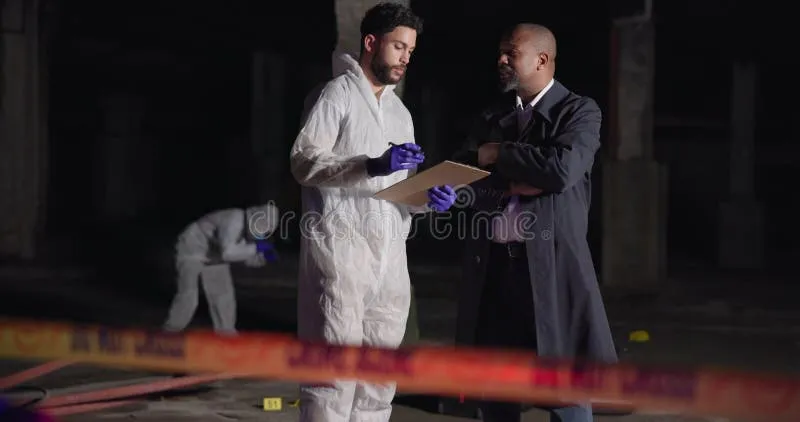
Photo: evidence video footage police investigation courtroom justice, via thumbs.dreamstime.com
There is a dangerous assumption embedded in the popular imagination about how justice works: that evidence, once obtained, speaks for itself. Advocates who have spent years fighting for individuals like Jean understand, with painful clarity, that this assumption is false. A timestamped video, a corroborating witness statement, a photograph that leaves no room for interpretation — none of these guarantees movement. None of them compels a prosecutor to act, an investigator to reopen a file, or a department to acknowledge what is already in its possession.
The belief that documentation automatically accelerates accountability has derailed more than a few justice campaigns. It has caused advocates to exhaust their energy gathering evidence rather than building the political and legal pressure required to force institutions to use it. Understanding why ironclad proof can sit dormant for months — sometimes years — is not a counsel of despair. It is the prerequisite for fighting smarter.
The Gatekeeping Architecture That Buries Evidence
American law enforcement and prosecutorial systems are not designed to be responsive to outside pressure. They are designed, structurally, to control the pace and direction of any investigation. When community members or advocates present evidence to a police department or district attorney's office, that material enters a bureaucratic ecosystem with its own hierarchy, its own timelines, and its own incentives — none of which necessarily align with the urgency felt by a victim's family.
In documented cases across the country, dashcam footage submitted by civilian witnesses has languished in evidence queues for six months or longer without review. In one widely reported instance in a mid-sized Midwestern city, surveillance footage from a private business — footage that directly contradicted the official account of a use-of-force incident — was formally acknowledged by the department but categorized as "supplemental" rather than "primary" evidence. That reclassification effectively deprioritized it within the department's own investigative workflow.
This is not always the product of malice, though it sometimes is. It is often the product of institutional design: evidentiary standards that require chain-of-custody documentation before footage can be formally entered into a case file, interdepartmental review processes that add weeks to each step, and legal thresholds that allow investigators to determine, unilaterally, that submitted material does not meet the bar for "relevance." Each of these mechanisms functions as a gate. And gates, by definition, are controlled by gatekeepers.
When Proof Becomes a Procedural Football
Advocates who have navigated this terrain describe a disorienting experience: the sensation of watching authorities acknowledge the existence of evidence while simultaneously doing nothing with it. This phenomenon — which legal scholars sometimes refer to as "evidentiary limbo" — occurs when material has been received but not formally incorporated into an active investigative record.
The practical consequence is that the evidence exists in a kind of institutional no-man's-land. It cannot be said to have been suppressed, because it has been acknowledged. But it is not being acted upon, because it has not been formally elevated. Advocates who attempt to follow up are frequently told that the matter is "under review" — a phrase that can mean anything from active analysis to indefinite postponement.
For families fighting for a loved one like Jean, this experience is not merely frustrating. It is re-traumatizing. The knowledge that proof exists, that it has been seen by the people with the authority to act on it, and that nothing is happening — that knowledge compounds grief with a particular kind of rage that advocates must learn to channel rather than absorb.
What Tactical Pressure Actually Looks Like
The most effective advocacy campaigns have learned to treat evidence submission not as a conclusion but as an opening move. The goal is not simply to deliver documentation; it is to create a paper trail that makes inaction politically and legally costly.
Several concrete strategies have proven effective in forcing authorities to engage with evidence they might otherwise defer indefinitely.
Formal written submission with certified delivery. Presenting evidence verbally or informally gives institutions maximum deniability. Every piece of documentation submitted to a law enforcement agency or prosecutor's office should be accompanied by a formal written cover letter, delivered via certified mail or process server, that explicitly describes the nature of the evidence, the date of submission, and the specific investigative questions the advocate believes it addresses. This creates a timestamped record that cannot be easily dismissed.
Simultaneous submission to oversight bodies. Routing evidence exclusively through the investigating agency allows that agency to control the narrative. Advocates should consider submitting the same documentation — simultaneously — to the relevant state attorney general's office, any applicable civilian oversight board, and, where appropriate, to elected officials with jurisdiction over the investigating body. Parallel submission distributes accountability and eliminates the single point of failure.
Engaging forensic or legal experts to authenticate and contextualize. Authorities sometimes resist evidence by questioning its provenance or interpretation. Preemptively securing a statement from a credentialed forensic expert, a licensed investigator, or a practicing attorney who can speak to the material's authenticity and significance removes one of the most common bureaucratic escape hatches.
Public documentation of the submission timeline. One of the most powerful tools available to an advocacy campaign is transparency about process. Publicly documenting — through press releases, community briefings, or a dedicated case timeline on a campaign website — the exact dates on which evidence was submitted, acknowledged, and subsequently ignored creates a public record that journalists, elected officials, and oversight bodies can reference. Institutions that might otherwise defer action indefinitely become measurably more responsive when their timeline is visible to the public.
The Role of Legal Advocates in Breaking the Logjam
Community advocates should not be expected to navigate evidentiary bureaucracy alone. Attorneys who specialize in civil rights litigation or wrongful death cases bring a specific and invaluable tool to this fight: the ability to compel production through formal legal mechanisms. A well-timed public records request, a motion to preserve evidence, or the threat of civil litigation can accomplish in weeks what years of informal pressure cannot.
The Justice for Jean movement has always understood that legal expertise and community mobilization are not competing strategies — they are complementary ones. Grassroots pressure creates the political environment in which legal action becomes viable. Legal action creates the formal accountability structures that give community pressure lasting effect.
Evidence Is the Beginning, Not the End
The lesson that every advocate who has fought for a case like Jean's eventually learns is this: obtaining proof is an act of courage. Forcing institutions to act on that proof is an act of sustained, strategic power.
The documentation trap ensnares advocates who believe that the moral weight of evidence is sufficient to move bureaucracies. It is not. Bureaucracies respond to pressure — legal, political, and public. They respond to timelines that become embarrassing. They respond to oversight bodies that are watching. They respond to communities that refuse to accept silence as an answer.
For anyone fighting to ensure that the evidence they have gathered does not disappear into an institutional void, the path forward is not to gather more evidence. It is to build more pressure. The proof already exists. The question is whether the will to force accountability exists alongside it.
At Justice for Jean, we believe it does. We have seen what communities can accomplish when they refuse to let institutions bury what is already known. The fight is not over when the footage is obtained. The fight is over when justice is delivered — and not a moment before.