The Ballot Lines Nobody Watched: What the 2026 Midterms Changed in the Offices That Decide Cold Cases
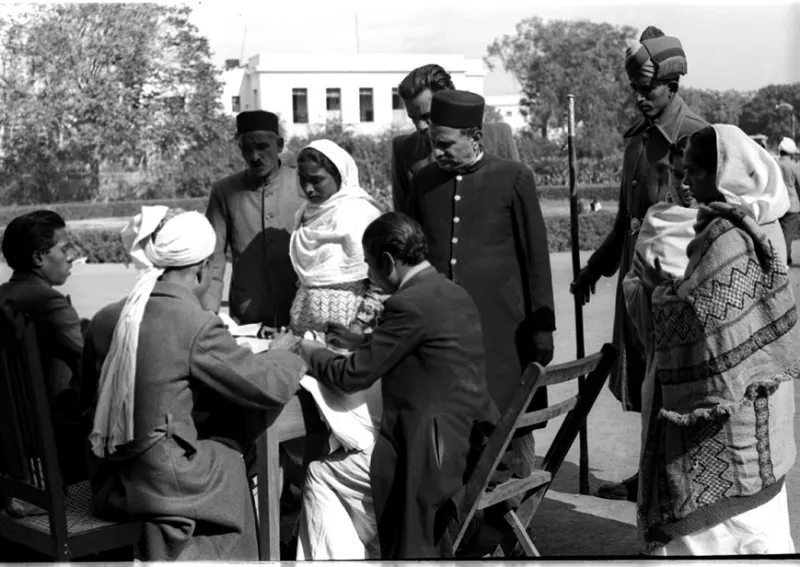
Photo: Photo Division, Ministry of Information & Broadcasting, Government of India, Public domain, via Wikimedia Commons
The 2026 midterm cycle is over, and the postmortems are already written around the races that dominated television. For the families waiting on a phone call about a case that has not moved in years, none of those contests mattered as much as the ones that appeared near the bottom of the ballot, often below a retention question for a soil and water district.
District attorney. Sheriff. County commissioner. Coroner. In most American jurisdictions, those four offices decide whether an evidence backlog gets tested, whether a cold case gets a detective, and whether a file marked inactive quietly stays that way. They are also the offices with the lowest turnout and the highest consequence. Jean's case did not stall because a president or a senator chose to ignore it. It stalled in a room where a locally elected official decided how to spend a finite number of hours.
What These Offices Actually Control
The prosecutor sets charging priorities and, more importantly for stalled cases, allocates investigative resources through task forces, grand jury time, and relationships with police agencies. The sheriff controls evidence storage, laboratory contracts, and — in many counties — the jail and the records that go with it. County commissioners approve the budget that funds forensic testing and determine whether an independent oversight board has staff or merely bylaws. Coroners and medical examiners determine manner-of-death findings that can convert an unexplained death into a homicide investigation.
None of this appears in a national exit poll. All of it appears in an appropriations ordinance.
The Pattern That Emerged in 2026
Across the country this cycle, three dynamics recurred in down-ballot justice races.
First, turnover was unusually high in prosecutor offices, driven by retirements and by incumbent vulnerability on questions of case backlogs and transparency. Where a reform-minded incumbent lost, the incoming administration generally campaigned on a promise to be tougher — a message that rarely translates into more cold case resources unless someone demands it. Where a reformer won, the victory was typically built on a coalition of organized labor, faith communities, and victim families, and those coalitions now hold IOUs that advocates should collect.
Second, sheriff's races drew unprecedented organized attention, in part because of detention conditions and in part because of records and evidence handling. Several contests turned on whether an incumbent had adequately maintained evidence storage, an issue that sounds technical until a family learns that a box from 2009 was destroyed under a routine purge.
Third, county commission and ballot measures on civilian oversight had a stronger year than expected. Voters in a number of jurisdictions approved oversight boards and, in some cases, the funding to staff them. An oversight board with a budget is a new and underused lever for case-level advocacy: it can compel production of internal records that a public records request might not reach.
Why the Transition Window Matters More Than the Campaign
The period between election day and inauguration is the most pliable moment in the life of an administration. Campaign promises are still unwritten into policy. Personnel decisions are being made. The budget request that will define the next four years is being drafted by someone who has not yet learned to say no.
Advocates who wait until March to make contact will be told that the budget was finalized in January. The window is now, and it is roughly ninety days wide.
Ten Demands to Deliver Before the First Budget Season
Arrive with specifics. A newly elected official can absorb a short, itemized list far more easily than a generalized appeal for compassion.
- A named cold case point of contact in the prosecutor's office, with a direct line and a written response standard of thirty days.
- A published case review policy stating which files are eligible for review and on what schedule.
- Dedicated forensic testing funds in the first proposed budget, with a stated annual figure.
- An inventory of untested evidence, published annually by category and age.
- A written evidence retention and destruction schedule that no administrator can amend without a public vote.
- A standing quarterly briefing to the county board on cold case intake and disposition.
- A victim family liaison position, funded, not volunteered.
- A published definition of "cleared" and "closed" that distinguishes prosecution from administrative closure.
- Support for the civilian oversight board's budget and subpoena authority.
- A commitment to meet with families of open cases at least twice a year, on the record.
Deliver the list to the transition office, the incoming chief of staff, and the county administrator simultaneously. Copy the local press. A demand made privately is a favor requested; a demand made publicly and in writing is a governing commitment.
Calendar It
Accountability is not a mood. It is a schedule. Note the date the county's proposed budget is released, the date of the public hearing on it, and the date the board votes. Put the ninety-day transition window on the same calendar. When the new officials take office in January, they will be measured by whether the line item exists in the document they sign.
For Jean, and for the thousands of families whose files are waiting on a budget vote that no one is watching, the work of this election cycle has only just begun. The ballots are counted. The appropriations are not.